


How to Build a Crypto Neobank in 2026: Features, Technology & Costs
Share:
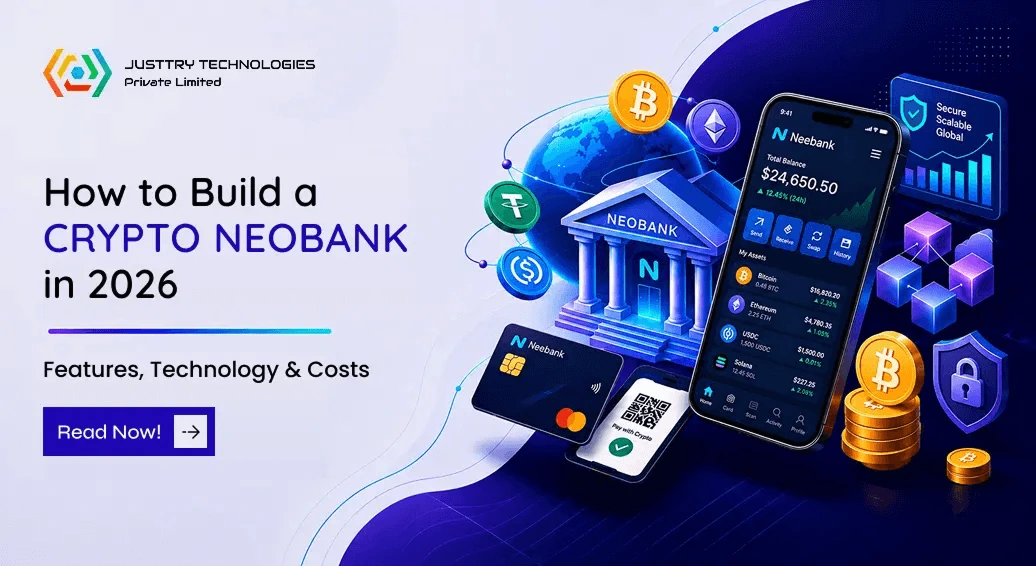
The financial industry is combining traditional banking with blockchain technology. People want faster payments, digital accounts, global access, and better control of their money. A crypto neobank provides these services through one mobile or web platform, including payments, crypto trading, cards, and account management. To succeed, it needs strong security, legal compliance, reliable technology, and an easy-to-use design.
What is a Crypto Neobank?
A crypto neobank is an online financial platform that brings regular banking and cryptocurrency services together. Users can keep traditional money and digital assets in one place, send and receive payments, transfer funds, exchange currencies, and manage their finances online.
It can be useful for international workers, businesses that use digital assets, freelancers who receive payments from other countries, and people who want to use both banking and crypto services.
In simple terms, a crypto neobank platform connects traditional money with blockchain-based assets. It makes managing different types of money easier without the need to visit a physical bank.
Why Should Businesses Build One in 2026?
The demand for easy digital financial services is growing as people prefer instant payments and app-based money management. Blockchain allows fast and transparent transactions, digital assets, and global payments. Businesses can offer crypto exchange, digital wallets, international payments, virtual cards, and premium accounts. A scalable platform can grow over time, but its main goal should be to meet real customer needs, not just use new technology.
Essential Features of a Crypto Neobank
Feature selection should be based on customer requirements, target markets, compliance obligations, and the intended business model.
Digital Account Management
Users should have a clear dashboard showing balances, transaction activity, account details, supported currencies, and payment history.
The interface should make financial information understandable even to users with limited blockchain knowledge.
Multi-Currency Wallet
A secure wallet system can allow customers to hold and manage multiple supported cryptocurrencies and fiat currencies.
Depending on the architecture, custodial, non-custodial, or hybrid wallet models can be considered.
Crypto-to-Fiat Conversion
Conversion functionality allows customers to exchange digital assets for traditional currencies. The system should clearly display exchange rates, network charges, service fees, and transaction status.
Payments and Transfers
Users should be able to send and receive funds efficiently. Blockchain transfers can be integrated with conventional payment rails where appropriate.
Virtual and Physical Cards
Cards can connect the digital asset ecosystem with everyday spending. Customers can use virtual cards for online purchases and physical cards for broader payment needs.
Transaction Notifications
Real-time notifications can inform users about deposits, withdrawals, card transactions, conversions, and security events.
Admin Dashboard
Administrators need tools for user management, transaction monitoring, asset configuration, support operations, reporting, risk controls, and compliance workflows.
Technology Stack and Architecture
Technology architecture is the platform's basic structure. Poor choices can cause slow performance and expensive changes later.
The frontend can use technologies like React, React Native, or Flutter. The backend can use Node.js, Python, Java, or other suitable technologies.
The system should keep important services separate instead of putting everything into one connected system.
Important components can include:
- User and account services
- Wallet and asset services
- Payment gateway integrations
- Blockchain connectivity
- Transaction processing
- Compliance systems
- Notification services
- Analytics and reporting
Cloud infrastructure can provide scalable computing, monitoring, backup, and disaster-recovery capabilities.
For a financial application, scalability must be accompanied by resilience. The platform should continue operating reliably during traffic spikes, network delays, and third-party service interruptions.
Blockchain, Wallets, and Smart Contract Infrastructure
Blockchain infrastructure determines how digital assets are stored, transferred, verified, and monitored.
A platform may integrate blockchain nodes directly or use specialized infrastructure providers. The correct choice depends on transaction volume, supported networks, operational requirements, and technical expertise.
Wallet architecture requires particular attention. Private keys and signing mechanisms must be protected using robust security controls. For custodial systems, institutional-grade key management and carefully separated operational permissions are essential.
Smart contracts can support programmable financial functions such as token transactions, rewards, automated settlements, and selected financial workflows.
However, not every operation should be placed on-chain. Sensitive customer information and certain high-volume operations may be better handled through secure off-chain systems while blockchain networks are used where they provide genuine value.
Security, KYC, AML, and Regulatory Compliance
Security is very important for financial platforms. Customers need to know that their money, personal information, and transactions are safe.
A crypto neobank can use security features such as encryption, two-factor authentication (2FA), biometric login, secure key management, access controls, fraud detection, and activity monitoring.
KYC and AML are also important. KYC verifies the customer's identity, while AML helps detect suspicious transactions and prevent financial crimes.
Rules and regulations are different in each country. Businesses should check licenses, data protection, reporting, customer protection, and crypto regulations before starting development.
Compliance should be considered from the beginning of development, not added at the end.
Development Process and Timeline
Stage 1: Market and Regulatory Research
The first stage identifies target customers, geographic markets, competitors, regulatory obligations, supported assets, and business objectives.
Stage 2: Product Planning
Core features, user journeys, technical requirements, payment integrations, wallet architecture, and administrative functions are defined.
Stage 3: UI/UX Design
Designers create the customer journey for account creation, deposits, withdrawals, conversions, payments, cards, and account management.
Stage 4: Development
Frontend, backend, blockchain, wallet, payment, compliance, and administrative modules are developed and integrated.
Stage 5: Testing
Testing should cover functionality, security, performance, API reliability, blockchain transactions, payment workflows, and failure scenarios.
Stage 6: Deployment and Maintenance
After controlled deployment, monitoring systems track performance and suspicious activity. Regular upgrades, security assessments, and feature improvements continue throughout the platform's lifecycle.
The timeline can range from several months for a focused MVP to significantly longer for a sophisticated, regulated, multi-market platform.
Crypto Neobank Development Cost in 2026
The crypto neobank development cost in 2026 typically ranges from $40,000 to $250,000+, depending on the platform's features and complexity.
- Basic MVP: $40,000–$70,000
- Mid-level platform: $70,000–$150,000
- Advanced platform: $150,000–$250,000+
The cost depends on features such as multi-chain support, crypto wallets, card integration, payment systems, KYC/AML, security, mobile apps, and admin tools. Ongoing costs may include cloud hosting, security audits, compliance, maintenance, and third-party services.
Conclusion
Build a future-ready crypto neobank with secure blockchain integration, seamless digital payments, multi-currency wallets, crypto-to-fiat conversion, and user-friendly financial tools. Justtry Technologies delivers customized solutions designed around scalability, security, compliance, and business goals. Whether launching an MVP or an advanced platform, the right technology strategy can help businesses enter the evolving digital banking and blockchain market with confidence.
Frequently Asked Questions


Get in Touch
We're available to assist and address any inquiries you may have. We eagerly anticipate receiving your communication.